Monday, June 13, 2011

Book Review: Leap Back Home to Me

Over the past year, the Water Library has enjoyed presenting story times to children in Wisconsin on a variety of water-related topics. Our favorite theme, by far, has been our readings about one of our favorite critters - frogs. It was with great anticipation that we opened a lovely new book today and read what may become a delightful addition to our story times.

In LEAP BACK HOME TO ME, Lauren Thompson presents the joy that frogs (and maybe children, too) feel as they grow in size and confidence. As the frog in our story leaps over many wonders of the world - from ladybugs to owl's nests to even the sun - it is secure in the knowledge that it can return home again to mom. At first glance, the text may seem simple. But the story engages children so they will sit in anticipation, wondering where our frog will go next. Matthew Cordell has illustrated the book with a keen eye toward the message of the story. The illustrations show the joy of the frog's adventure and the deep love our frog feels when reuniting with its mom.

The library is looking forward to integrating LEAP BACK HOME TO ME into its frog story time - we hope our littlest readers love it as much as we do.

Happy reading!

Friday, June 3, 2011

Look what we found in the library!

Award-winning books.........

Water Library staff recently cataloged the book, "Burning Rivers: Revival of Four Urban-Industrial Rivers that Caught on Fire," by Michigan writer Dr. John Hartig. It recently won the scientific category at the Green Book Festival in San Francisco. It was also a finalist in the science/nature/environment category at the 2011 Next Generation Indie Book Awards.

I am reminded of another award-winning book in the library, co-authored by Wisconsin Sea Grant's very own Kathy Kline and Fred Binkowski, with Ron Bruch of the Wisconsin DNR, with photographs by the late Bob Rashid. People of the Sturgeon tells the poignant story of an ancient fish. Wanton harvest and habitat loss took a heavy toll on these prehistoric creatures until they teetered on the brink of extinction. But in Wisconsin, lake sturgeon have flourished because of the dedicated work of Department of Natural Resources staff, university researchers, and a determined group of spearers known as Sturgeon For Tomorrow. Purchase your 'People of the Sturgeon' from the Aquatic Sciences Center Pub Store.

So many books. so little time!

Monday, May 23, 2011

Health of Great Lakes Birds

From the Great Lakes Echo:

Several species of birds in the Great Lakes region are making a comeback, according to a recent report.

Federal officials documented the successes and the challenges facing several bird species on U.S. public lands in the 2011 State of the Birds report.

Two success stories are from within the Great Lakes region – the Bartel Grassland restoration project outside of Chicago, Ill., and the state of the Kirtland’s warbler in Michigan.

Link to rest of article.

Link to full report.

image of yellow-billed loon from 2011 state of the birds report.

Wednesday, May 18, 2011

Recent Acquisitions in the Water Library

Wisconsin's Water Library invites you to browse our list of new books introduced into the library during March and April 2011. The library is very appreciative of a grant from the Friends of UW Madison Libraries to purchase several titles included here. Also fresh, with titles purchased during winter and spring, is our new books for kids list!

Are you interested in mapping and GIS trends? We’ve recently created a recommended reading list on Mapping. For scholars, we’ve updated content on our Water Research Guide. If you aren’t affiliated with UW, use the ‘Resources for Guests’ tab for helpful hints on water research.

And don't forget to follow us on Twitter = @WiscWaterLib and please "like" our Facebook page = UW Wisconsin’s Water Library

Happy reading!

Tuesday, May 10, 2011

What's Net-Zero Water?

Net-zero water is a concept that entails separating your water system from the rest of the grid. When it rains, the water you collect in your rain barrels or on your roof will be the water that allows you to wash dishes in the sink or flush your toilet. Your used water will be treated on-site which allows for re-use several times. Water is divided into three categories: rainwater, graywater, and blackwater, depending on the level of pathogens. Both rainwater and graywater (water from sinks and showers) can be treated to be used later as potable water, but blackwater (dispoal or wastewater) cannot be made potable.

One recent example of a building working toward net-zero water is the Bertschi School in Seattle. This article explains how the school is working to accomplish net-zero water including a composting toilet and a wall of plants. As water continues to be one of the most important and limited resources, net-zero water is getting more attention. While the standard may be too challenging for many, it's always helpful to think of ways to help conserve water. This list offers 100 suggestions for water conservation.

Photo credit: Bertschi School

Thursday, May 5, 2011

Invasives at Fault for Great Lakes Salmon Dearth?

Four decades ago, salmon were added to the Great Lakes by Michigan fisheries biologists. In the following years, the fishing industry flourished as did the salmon. Cars hauling boats would be lined up with anglers just waiting to get out in the lakes and catch fish. But now, things have changed.

The invasive mussels came in and altered the food web. Alewives, one of salmons' favorite fish to feed on, have mostly disappeared from the Great Lakes. Without enough time, the salmon were unable to adapt their diet as their food supply disappeared. Walleye, a native species, have returned to the lakes and are also responsible for eating the salmon. Last fall the Lake Michigan salmon never showed up at spawning time. Things aren't looking good for the salmon.

Listen to the NPR Story for more details.

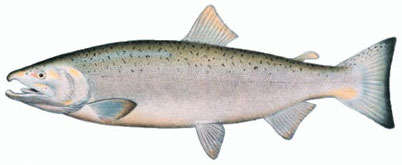
Photo credit: Coho salmon - muskegon-mi.gov

Tuesday, May 3, 2011

How do you use your 68? : Drinking Water Week

The first week of May every year has hosted the celebration of National Drinking Water Week since the Reagan years. The purpose is to raise awareness and educate people about public and private drinking water issues. The American Water Works Association (AWWA) is one of the main entities responsible for disseminating information about Drinking Water Week.

Locally, Madison Water Utility will be holding an open house on May 7th where they will explain some of the ways they interact with water in the process of supplying it to the community. There will also be other water-related displays and exhibits. An average Madison resident uses 68 gallons of water per day. Additional information about the open house and local statistics can be found in the City of Madison news release.

The EPA offers some helpful ideas about what you can do to help protect drinking water. View our recommended reading list on drinking water quality.

Photo credit: Portland Fountain by Amy De Simone