Showing posts with label fish. Show all posts

Tuesday, April 9, 2013

Book Review: Fish In Art

Ranging from ancient Egyptian wall art to contemporary photorealist paintings, fish in their countless  aquatic forms have captivated and inspired artists as a subject matter to paint, draw, sculpt, and photograph.

Fish in Art may be the first study devoted to artistic representations of fish in art.  The almost 200 images are spread throughout chapters divided by their depictions in the sea, on the beach, in markets, in the kitchen, on the table, in still waters, in rivers, and on the riverbank.

The author, Christine Jackson combines her academic expertise in natural history with research into art history to illustrate how these depictions of fish connect significantly to the religious, social, political, and economic moments they reflect.

A richly visual treat we are happy to have added to our library's collection and hope you can check it out soon.

If you are a Wisconsin resident and would like to check out this or any other book, please fill out our book request form. If you are a UW student, faculty or staff, please request books through the Library Catalog.   


Wednesday, January 23, 2013

Wisconsin Fish Identification

Muskellunge (Esox masquinongy)
Carpsucker, Highfin (Carpiodes carpio)
Anglers and fish enthusiasts have a new tool to aid them in identifying the countless varieties of fish found in Wisconsin waters. UW Sea Grant’s IT and communications team   recently updated an online tool that offers a searchable database and identifies fish by name and appearance.  The tool builds on a previous version created by UW Sea Grant, the UW Center for Limnology and the Wisconsin Department of Natural Resources.  Currently accessible on you desktop or tablet, a mobile version is in the works and should be available later this year.  Imagine pulling an unknown fish out of a Wisconsin lake and identifying it easily by consulting the images available on your smart phone.  The future is now folks.

The Wisconsin Fish Identification site can be found at www.seagrant.wisc.edu/fishid.

UW Digital Collections offers access to the full text of George C. Becker's book Fishes of Wisconsin here

Wisconsin Sea Grant's ever popular Great Lakes Fishes posters are available here.

Tuesday, February 14, 2012

Featured Books Week: World Without Fish

Title: World Without Fish
Author: Mark Kurlansky
Publisher: Workman Publishing, 2011

Let's kick off our Featured Books Week with World Without Fish, a book that teaches kids-and adults- about activism and how our actions affect the environment.  Sometimes a chapter book, sometimes a graphic novel, World Without Fish explains what's happening to underwater ecosystems, and what kids of any age can do to help. On the dust jacket, author Mark Kurlansky says, "Welcome to a special moment in history: A time when your generation, more than any other, has the opportunity to save the planet, and it all begins with fish."


Fun text and pictures keep the book exciting for readers of all ages, although its message is important for everyone. The final chapters explain not only how to eat fish safely and sustainably, but how kids of any age can make a difference. Kurlansky also provides an annotated listing of organizations and environmental groups working on marine issues. Not only is this book a fun, interesting read, it's also an important call to action. As Kurlansky says in Chapter 11, "it's time to wake up and smell the fish!"


What can you do?

Wednesday, December 14, 2011

"Healthy Dishes With Wisconsin Fishes"

Send your healthy fish recipes to the Wisconsin DNR for a chance to be featured in the DNR online cookbook or Wisconsin Natural Resources magazine!

Judging criteria includes species diversity, creativity, and ease of preparation, among others. Keep in mind, though, that the recipe must use a Wisconsin species of fish.

Click here for more information. The DNR will be accepting submissions via email until April 1, 2012. Good luck!

Thursday, May 5, 2011

Invasives at Fault for Great Lakes Salmon Dearth?

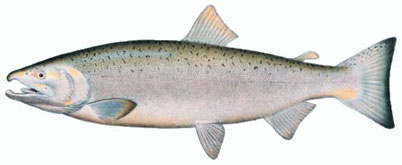
Four decades ago, salmon were added to the Great Lakes by Michigan fisheries biologists. In the following years, the fishing industry flourished as did the salmon. Cars hauling boats would be lined up with anglers just waiting to get out in the lakes and catch fish. But now, things have changed.

The invasive mussels came in and altered the food web. Alewives, one of salmons' favorite fish to feed on, have mostly disappeared from the Great Lakes. Without enough time, the salmon were unable to adapt their diet as their food supply disappeared. Walleye, a native species, have returned to the lakes and are also responsible for eating the salmon. Last fall the Lake Michigan salmon never showed up at spawning time. Things aren't looking good for the salmon.

Listen to the NPR Story for more details.

Photo credit: Coho salmon - muskegon-mi.gov

Wednesday, April 6, 2011

VHS: The Fish Disease, Not Your Old Videotapes

Imagine a type of Ebola, just for fish. Bulging eyes, hemorrhaging in the muscle tissue and internal organs, and pale organs are some of the clinical symptoms of Viral Hemorrhagic Septicemia (VHS), a deadly fish virus, which was confirmed to be present in Milwaukee waters last month. Since the virus affected thousands of gizzard shad in Lake Michigan, the DNR has been taking steps to prevent the spread of VHS. In addition to restricting bait which may be carriers of the virus, they are also requiring gear to be drained by boaters and anglers upon leaving the water or before entering the state. While VHS hadn't been an issue in Lake Michigan since 2008, assertive steps are being taken to combat it in Wisconsin waters.

This fact page put together by the WDNR has a wealth of information about VHS, and suggestions for preventing its spread are available here. For more information, read the detailed WDNR release, or the Journal Sentinel release. For books on fish and fishing, see our recommended reading list.

Photo credit: from WDNR website, Dr Jim Winton (USGS, Seattle WA), Dr Mohamed Faisal (MSU, Lansing MI) and Dr Paul Bowser (Cornell, Ithaca NY)

Friday, March 18, 2011

Friday Fish Fry? Try the Great Lakes Whitefish

In Wisconsin we know that there aren't too many things better on a Friday than a tasty fish fry. Restaurants all over the state do a booming business serving up fried fish on Friday evenings. Of course there is a bit of history behind the fish fry tradition that you can read about here from UW-Madison folklorist Dr. Janet Gilmore, but what about starting your own family fish fry tradition at home?

Recently published by Michigan Sea Grant, "Wild Caught and Close to Home: Selecting and Preparing Great Lakes Whitefish" offers more than 50 recipes from credentialed chefs and whitefish specialists to help you get started making your own fish at home. For those who are interested in healthier options than frying, it also offers ideas for steaming, poaching, smoking, grilling and pickling, to name a few. It also offers a brief history of whitefish.

The Water Library is acquiring this book,  but if you just can't wait, check out these other books we have to offer on preparing fish. You can check this website for further information on Great Lakes whitefish.

Tuesday, February 1, 2011

Shortage of Fish Fry Favorite: Yellow Perch

Sad news for the crew of the Barney Devine, a sea vessel being retired and replaced by a newer, more technologically advanced ship, Coregonus. The Barney Devine set out to record the number of yellow perch in Lake Michigan, but returned with a hole in her hull and a remarkably smaller number of recorded fish than previous years. Since the survey area was the same as previous years some researchers are unsure of the cause of the fishy decline. Some blame quagga, a mussel inhabiting the bottom of the lake, known to consume plankton, a valuable feeding resource for young perch. The DNR will not be changing bag limit (number of fish that can be caught) on yellow perch for the time being. For further information, see the WDNR news release.

Photo credit: WDNR website

Monday, November 29, 2010

'Tis the Season for Fishy Gifts

Now that Thanksgiving has passed, it's time to start thinking about presents! The UW Aquatic Sciences Center (ASC) Publications Store might have just what you need for that special fishy someone in your life.

The Great Lakes Fishes poster (shown right) pictures and identifies 35 varieties of fish you may encounter in the Great Lakes. What kid (or grownup) fisherman wouldn't want to have this on his wall?

For the all weather fishermen, the free "Ice Fishing" booklet is available by mail or as a downloadable pdf. "This guide to successful winter ice fishing includes: fishing gear and gadgets, tips on how to catch bluegill, yellow perch, northern pike and walleye, safety advice for thin ice and how to stay on top of the ice, clothing advice and Wisconsin regulations."

For the fish lover who does not partake in fishing, “People of the Sturgeon: Wisconsin’s Love Affair With an Ancient Fish,” a coffee-table book, is a beautiful addition to any collection. This 320 page award winner contains images, stories and interviews about lake sturgeon and their connection to Wisconsin's history and culture.


For further details on these and other available treats, see the ASC press release. For the non-givers, Wisconsin's Water Library provides reading lists on related topics including: Ice Fishing, Fish and Fishing in Wisconsin and Cooking.

Thursday, September 23, 2010

Genetically Engineered Fish and Chips

Would you side with 78% of surveyed adults who feel the FDA should not yet approve genetically engineered salmon for human consumption? Meetings have taken place, and parties are casting their votes. Some of the controversial topics are: whether or not the FDA should approve genetically engineered (GE) salmon, if approved, should labeling be required to advise consumers of the type of fish they are purchasing, and if the GE salmon are as healthy for people and for the environment as regular farm raised salmon are.

Obviously, there are many interdependent factors here, such as the methods companies use to grow the fish. AquaBounty Technologies, one of the sponsors of the GE salmon, submitted reports indicating the fish would be safe to eat, and safe for the environment. Many demand more research be done, and the public seems to be in agreement according to a study recently released by Food & Water Watch.

The FDA's Overview of Atlantic Salmon provides some useful information for interested parties. Food & Water Watch's release about the labeling of GE salmon can be seen here. For further reading, you can view our recommended reading list on aquaculture.

Salmon photo courtesy of dallasnews.com
.

Tuesday, August 31, 2010

Asian Carp: The Introduction You May Have Missed

While you have probably heard about the controversy and fears surrounding Asian carp, maybe you missed a bit of the background information. The term Asian carp actually accounts for four different types of fish according to the USDA: black carp, silver carp, the Bighead carp and grass carp. An article written by the California Academy of Sciences on these fish can be seen here.

These fish were originally introduced for the purpose of algae control, but then spread in an unintended manner. They can grow to over 20 feet long and 100 pounds, eating up to 40% of their weight a day in plankton. This causes a danger to the food chain, especially for the bottom of it. Asian carp are also know for jumping out of the water when they are scared or alarmed, which happens somewhat frequently in the presence of boats, since they feed near the water's surface. For a fish this size, unpredictable flight type movements have been known to injure boaters and fisherman. This video can help you get an idea of the movement of these fish.

For a suggested reading list on Great Lakes Fish, click here.

Asian Bighead carp photo by M. Spencer Green.

Monday, August 30, 2010

Yellow Perch Numbers Up In Green Bay

According to the Wisconsin DNR, Yellow Perch numbers are up this year, and are the third highest seen in the last 30 years. This may have to do with increased water temperatures that were present during spring and summer this year, as well as an early hatch. A high rate of mortality among first through third year yellow perch has the DNR concerned. Some causes are hypothesized, including predators such as walleye and/or northern pike, as well as birds called cormorants which the DNR are taking specific steps to control. More about the cormorant can be read here. Fishermen are not suspected as being problematic in this instance because most yellow perch they keep are around 8 inches or more, which typically occurs in the third year. Click here for the full press release from the WDNR.

WDNR photo shows an adult yellow perch with young-of-year perch.

Monday, May 24, 2010

Atrazine research from USGS

New report from the US Geological Survey:

Commonly Used Atrazine Herbicide Adversely Affects Fish Reproduction


Atrazine, one of the most commonly used herbicides in the world, has been shown to affect reproduction of fish, according to a new U.S. Geological Survey (USGS) study.

“Concentrations of atrazine commonly found in agricultural streams and rivers caused reduced reproduction and spawning, as well as tissue abnormalities in laboratory studies with fish,” said USGS scientist Donald Tillitt, the lead author of the study published in Aquatic Toxicology.

Fathead minnows were exposed to atrazine at the USGS Columbia Environmental Research Center in Columbia, Mo., and observed for effects on egg production, tissue abnormalities and hormone levels. Fish were exposed to concentrations ranging from zero to 50 micrograms per liter of atrazine for up to 30 days. All tested levels of exposure are less than the USEPA Office of Pesticides Aquatic Life Benchmark of 65 micrograms per liter for chronic exposure of fish. Thus, substantial reproductive effects were observed in this study at concentrations below the USEPA water-quality guideline.

Study results show that normal reproductive cycling was disrupted by atrazine and fish did not spawn as much or as well when exposed to atrazine. Researchers found that total egg production was lower in all atrazine-exposed fish, as compared to the non-exposed fish, within 17 to 20 days of exposure. In addition, atrazine-exposed fish spawned less and there were abnormalities in reproductive tissues of both males and females.

Read entire press release.

Research findings found here.

Wednesday, March 17, 2010

Wisconsin Sea Grant research on perch

A project funded by Wisconsin Sea Grant is attempting to overcome some of the difficulties that have challenged the yellow perch aquaculture industry.

Wednesday, February 17, 2010

See where yesterday's donated fish came from

Fred Binkowski, with Wisconsin Sea Grant and the UW Milwaukee WATER Institute, talks about his lab's donation of over 500 pounds of yellow perch to the Hunger Task Force. Binkowski is the aquaculture specialist at the University of Wisconsin Sea Grant Institute, and his lab is at the Great Lakes WATER Institute in Milwaukee. This second annual donation is an opportunity to benefit a local shelter for the homeless with more than 200 fresh perch dinners:

Wednesday, November 11, 2009

New EPA report on fish contamination

In a new report, the Environmental Protection Agency has found a "widespread contamination" of fish in the nation's lakes and reservoirs. The result of a nearly decade-long screening-level survey, called the National Lake Fish Tissue Study, the report provides new baseline data for chemical residue in fish.

A statistical (random) sampling of 500 U.S. lakes and reservoirs, the study analyzed tissue samples of both predator fish species, like bass or trout, and bottom-dwelling species, like carp or catfish. The researchers tested the samples for 268 chemicals, including mercury, arsenic, dioxins and furans, pesticides, and semivolatile organic compounds.

The results are dramatic:
  • 49% of the sampled population of lakes had mercury tissue concentrations that exceeded the 0.3 ppm screening value for mercury, which represents over 36,000 lakes.
  • 17% of the sampled population of lakes had PCB tissue concentrations that exceeded the 0.12 ppb screening value for total PCBs, which represents about 13,000 lakes
  • 8% of the sampled population of lakes had dioxin and furan tissue concentrations that exceeded the 0.15 ppt screening value for total dioxins and furans, which represents about 6,000 lakes.
To learn more about the National Lake Fish Tissue Study, visit their website: http://www.epa.gov/waterscience/fish/study/

Or read the Final Report Executive Summary
http://www.epa.gov/waterscience/fish/study/data/summary.pdf

Monday, November 9, 2009

Sturgeon's reintroduction at White Earth

The Water Library recently attended a keynote address by Winona LaDuke, an Anishinaabe activist from Minnesota's White Earth Ojibwe Reservation. In town for the Nelson Institute's Tales from Planet Earth Environmental Film Festival, her talk often focused on water.

Sturgeon, especially. Even a "Sturgeon General."

The White Earth band, located in northwestern Minnesota, has been restocking its waterways with the ancient fish for nearly a decade. With assistance from the Rainy River First Nations' hatchery in Canada, and their "Sturgeon General," Joe Hunter, the program has become increasingly successful. White Earth and Round Lakes are stocked with thousands of fry every year. Sturgeon are swimming again where they haven't been seen in decades.

And White Earth isn't alone. Efforts at resuscitating lost sturgeon populations are occurring throughout the Upper Midwest.

To learn more about White Earth's sturgeon program, read LaDuke's book Recovering the sacred: The power of naming and claiming. Cambridge, MA: South End Press

Or, check out the Water Libary's related reading lists:

Native Americans and the Environment
More about sturgeon

Wednesday, October 28, 2009

Cookbooks!

A recent piece heard National Public Radio highlighted a new book coming out titled ALL CAKES CONSIDERED. That piece and the coming cold weather got the Water Library thinking about food and what the library has to offer for the culinary wizards in our state. There are five cookbooks in the Water Library available for checkout. All five are devoted to seafood.

The library is always looking to develop its collection so if you know of a book we should add to our collection, please let us know. Send a message to askwater @ aqua.wisc.edu. If there is a definite winner recipe you try, please let us know and we'll put it on our blog.

Bon appetit!

Friday, October 9, 2009

New report from USGS: Nonnative Fishes in the Upper Mississippi River System

From report abstract: The introduction, spread, and establishment of nonnative species is widely regarded as a leading threat to aquatic biodiversity and consequently is ranked among the most serious environmental problems facing the United States today. This report presents information on nonnative fish species observed by the Long Term Resource Monitoring Program on the Upper Mississippi River System a nexus of North American freshwater fish diversity for the Nation.

Read rest of abstract and full report.

Thursday, October 8, 2009

Weird video of the day

National Geographic has posted a video of a bizarre fish found deep in the waters beneath Brazil. Scientists say there are about 30,000 known species of fish identified around the world, with many more yet to be discovered. Let's hope they don't all look like this one:

Bizarre fish video

If you'd rather see the beautiful fish of the Great Lakes, check out this nice Sea Grant Web site.