Showing posts with label environmental advocacy. Show all posts

Thursday, April 11, 2013

Bottle Free Badgers

We've all become accustomed to the convenience of drinking bottled water.  So much so that many of us have forgotten that it is a relatively recent consumer phenomenon.  We have also followed the objections that many have raised concerning their effect on our environment.  On campus, a student group formed called Bottle Free Badgers to organize around some of the negative impacts of our use of bottled water and propose a ban on their sale throughout campus.  Their campaign points out that plastic water bottles are harmful to the environment and major corporations are profiting off of our natural resources unnecessarily. Bottled water is more often than not just tap water that has been repackaged and sold back to us at a 1000 times more expensive cost.  By using reusable water bottles, drinking tap water, and making a commitment to avoid using bottled water, we will use less plastic and produce less waste in our environment.  These are compelling arguments and certainly worth our consideration. 

Here are the top five reasons Bottle Free Badgers thinks its important to reconsider bottled water sales on campus:

1. Bottled water leads to water shortages.
2. Bottled water contributes to climate change.
3. Our landfills cannot support bottled water.
4. Bottled water is not safer.
5. Water is a human right.

Follow Bottle Free Badgers:
On Twitter
On Facebook
And by reading their Bottle Free Badgers Blog

SIGN Bottle Free Badgers petition to ban sales of 1 Liter or less plastic water bottles on UW Madison's campus, specifically in unions, housing and athletics.  HERE

The Wisconsin's Water Library has many books and DVD's that address the topic of bottled water including:
Bottled and Sold : The story behind our obsession with bottled water 
Bottlemania : How water went on sale and why we bought it
Tapped (DVD)

Friday, October 19, 2012

Clean Water Act Celebrates 40 Years


This week we celebrate the achievements of the Clean Water Act as it reaches a 40 year milestone.  Through the early decades of the 20th Century, rivers, lakes, estuaries and coastal waters had become gravely threatened by pollution from unchecked industrial sources and outdated and inadequate wastewater treatment infrastructure. Countless waterways across the country were so polluted they were unfit for any purpose.  The impact of this unchecked pollution reached a undeniable crisis moment when the Cuyahoga River caught fire in Cleveland in 1969.  The dramatic sight of these burning waters certainly provided a strong impetus for future legislation.

American citizens then pressured Congress to act to protect our water resources. This advocacy led to the Federal Water Pollution Control Amendments of 1972, a landmark expansion of previous provisions to protect the nation’s water resources. The Clean Water Act, as these Amendments came to be known, have led to tremendous progress in the restoration of America’s waters.

While much has been accomplished, there is always more to be done to protect our water resources.  EPA's website concludes "many challenges remain and we must work together to protect clean water for our families and future generations. Everyone has an impact on the water and we are all responsible for making a difference. Water is worth it."

Resources for further reading:

The EPA Clean Water Act 40th Anniversary Page
EPA's Summary of the Clean Water Act
History of Water Quality Standards
University of Wisconsin Water Resources Institute
My Clean Water Act Advocacy
EPA Information for Kids


Wednesday, February 29, 2012

Consumption & the Environment

Yesterday we asked our fans on Facebook and Twitter what they think are the seven most harmful consumer activities, in terms of their effect on the environment. Turns out you guys know your stuff! Answers included plastic bags, food waste, meat consumption, water waste, and driving, among others.

Here's the real breakdown, according to "The Consumer's Guide to Effective Environmental Choices: Practical Advice from the Union of Concerned Scientists."  They analyzed the impacts of 134 different human activities, and these were deemed the most harmful in terms of greenhouse gases, air pollution, water pollution, and habitat alteration.

  • Cars and light trucks
  • Meat and poultry
  • Fruit, vegetables and grains
  • Home heating, hot water, and air conditioning
  • Household appliances and lighting
  • Home construction
  • Household water and sewage
What else do you think should be on the list? Is it possible to reduce our consumption? You can visit the Union of Concerned Scientists' web site to learn more about the book, as well as their other studies and publications.

Wednesday, February 22, 2012

Is Your Life too Plastic?


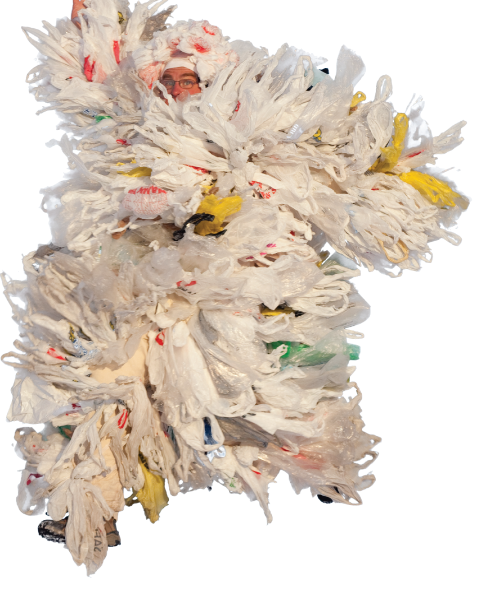
We're thinking about plastics this week at the Water Library, starting with the film Bag It: Is Your Life too Plastic? In this 2010 documentary, one man starts out trying to determine the effect that plastic bags have on our environment, and ends up discovering shocking information about plastic's effects on our oceans, our health, and the development of our children. He encourages viewers to consider their own dependence on plastics- and how we can cut back.

Interested in learning more? Check out these resources and books about plastics from Wisconsin's Water Library.
The Bag It website lists several tips for helping cut back on unnecessary plastics usage. Some are more commonly known ideas, like using reusable grocery bags and giving up bottled water. Others are less obvious. Did you know that you can make your own carbonated drinks to cut back on purchasing bottles? Using bar soap and bar shampoo can also decrease our dependence on plastics. Click here to see the full list!

Image via Bag It

Tuesday, February 14, 2012

Featured Books Week: World Without Fish

Title: World Without Fish
Author: Mark Kurlansky
Publisher: Workman Publishing, 2011

Let's kick off our Featured Books Week with World Without Fish, a book that teaches kids-and adults- about activism and how our actions affect the environment.  Sometimes a chapter book, sometimes a graphic novel, World Without Fish explains what's happening to underwater ecosystems, and what kids of any age can do to help. On the dust jacket, author Mark Kurlansky says, "Welcome to a special moment in history: A time when your generation, more than any other, has the opportunity to save the planet, and it all begins with fish."


Fun text and pictures keep the book exciting for readers of all ages, although its message is important for everyone. The final chapters explain not only how to eat fish safely and sustainably, but how kids of any age can make a difference. Kurlansky also provides an annotated listing of organizations and environmental groups working on marine issues. Not only is this book a fun, interesting read, it's also an important call to action. As Kurlansky says in Chapter 11, "it's time to wake up and smell the fish!"


What can you do?

Monday, December 12, 2011

Ecofriendly Holidays

Piles of used gift wrap, tangled lights that don't work, and heaps of plastic plates at the office holiday party have become a staple of the holidays. It's not hard to believe that Americans dispose of an additional 5 million tons of trash between Thanksgiving and New Years.  That's a 25% increase, but there's ways that you can help to minimize holiday waste without sacrificing fun or tradition.

Gift-Giving
  • Look for gifts that are durable, repairable, or recyclable, with minimal plastic packaging
  • Shop locally, or consider fair trade purchases
  • Give someone a membership to a museum or institute, plant a tree in their name, or consider purchasing a gift from Heifer International or Oxfam America
  • Recycle by wrapping gifts using sheet  music or colorful magazine ads- you'll save money, too!
Holiday Cheer
  • It takes 7-10 years to grow a Christmas tree- which is usualy useful for about one month. Consider purchasing a potted tree that can be kept alive outdoors throughout the year.
  • Ingredients for holiday meals usually travel about 1200 miles before showing up on our tables. That transit takes a lot of fuel and a lot of refrigeration. Purchasing locally-grown and in-season items can cut down on this behind-the-scenes waste.
Looking for more ways to make the holidays eco-friendly? Visit Ecology Center for a more complete list.

Thursday, April 14, 2011

Earth Day: History and Action

Earth Day evolved from a national teach-in on the environment in 1970, an idea from Wisconsin's own senator, Gaylord Nelson. He felt that attention to environmental issues was fundamental to the healthy survival of our planet and that teaching and spreading awareness would inspire action and political support. Nelson was correct and Earth Day now spans over 150 countries and was April 22 was designated International Mother Earth Day by the United Nations in 2009. UW-Madison is home to The Nelson Institute for Environmental Studies which holds an annual Earth Day Conference. This video collages participants' thoughts from last year's conference.


This year Wisconsin's Water Library is proud to be collaborating with The Rosemary Garfoot Public Library (RGPL) in Cross Plains, Wisconsin's first green library, to put on a special Earth Day storyhour presentation. RGPL does have a special environmental collection that you can read about here, and these books do circulate to Madison Public libraries as well. See the Water Library's reading list on environmental activism books for kids. There is also a wealth of additional information about Earth Day at this website.

Video credit: Nelson Institute at UW-Madison

Monday, January 24, 2011

New Dane County Partners for Recreation and Conservation Program

Dane County is encouraging communities and nonprofit organizations to submit applications with ideas for improving outdoor area recreation or natural resources. This new program, Dane County Partners for Recreation and Conservation (PARC), is aimed at creating "opportunities to not only enhance our quality of life but also bring in new tourism dollars and preserve valuable natural resources not found anywhere else" (Falk, Dane County Executive). This includes such initiatives as trail improvement and development, stream restoration, road widening for bike paths, or the expansion or addition of sports complexes.

This county assistance program was written into the 2011 county budget and supports up to $1 million dollars in funding to support proposals for enhancing recreation and conservation. Applications are currently being accepted. Detailed application information is available in the Channel3000 news release, as well as further information on the PARC program.

Friday, June 5, 2009

Bike to work week begins tomorrow!

UW Commuter Solutions at the University of Wisconsin-Madison is encouraging the campus community to take part in Bike to Work Week - which runs from Saturday, June 6-Friday, June 12 - to support the two-wheeled alternative to driving alone.

The Bicycle Federation of Wisconsin sponsors the weeklong promotion, featuring events that include morning snacks, bike tune-ups and a week-ending celebration of cycling at Vilas Park. For more information on all of the week's events, visit http://www.wisc.edu/trans/files/biketoworkweek.pdf.

Wednesday, April 22, 2009

Earth Day: Resources for Earth Friendly Living

from Madison Public and Wisconsin's Water Libraries

For most of this decade, Madison Gas and Electric, Madison Public Library, and Sustain Dane have teamed up to develop a special book and video collection dedicated to earth-friendly living and communities. With growing public interest in this subject, the partners have once again significantly enhanced the collection. The newest additions can be found in the vibrant, newly updated brochure, Greening Our World.

To view their collection, visit Madison Public Library.

Wisconsin's Water Library has many books and videos on similar topics of interest, such as green gardening, water conservation, Native Americans and the environment, and tools for conservation organizations.

Please feel free to request any of these books from Wisconsin's Water Library. If you are a UW-Madison student, faculty, or staff, please request books through MadCat.

Tuesday, April 21, 2009

Green Week at UW-Madison Memorial Union

Green Week is a celebration of Earth Day, the environment, and student conservation efforts. Between April 13th and April 29th over twenty events including concerts, eco fairs, lectures, and films will take place. This series of events will offer a fortnight of enlightening, educational, and interactive programs that address a wide range of environmental and social justice topics. The majority of events will take place on, or near, the University of Wisconsin campus.
A complete list of scheduled events is at the Memorial Union's website.

Monday, January 26, 2009

Environmental contests for students

The Wisconsin Rural Water Association (WRWA) and local water utilities are sponsoring a water conservation poster competition for students, while the Wisconsin Department of Natural Resources (DNR) is sponsoring both a poster and an essay contest about trees.

Teachers throughout Wisconsin are invited to enter the artwork of 1st-6th graders in the WRWA’s 2009 Water Conservation Poster Contest. Winners will receive prizes and have a chance at a prize for their school.

As part of the project, teachers are encouraged to discuss the importance of water resources, and schools may contact the WRWA for a possible presentation. The organization has provided some water facts to consider:

- Water is essential to life and is used in many ways.
- Wisconsin uses more than 7 billion gallons of water per day, with about 80% used for thermoelectric power.
- Each person uses approximately 60-80 gallons of water every day in Wisconsin.

Deadline for entries is March 11, 2009. More information and rules are available on-line.

Please view Wisconsin's state education newsletter for a list of more environment-themed contests.

Tuesday, December 23, 2008

Tips to help reduce waste, save energy and keep the holidays green

The Wisconsin Department of Natural Resource provides some tips on how to make your holidays greener. Some of our favorites include:

Give gifts that help your friends and family live greener. Possibilities include bus tickets, state park passes, compost bins, reusable grocery bags, rechargeable batteries and chargers, live plants and seeds or coupons for spring gardening.

Don’t throw away your holiday or greeting cards; use them to make new cards next year.

Reduce waste by wrapping gifts in comics, old maps, wallpaper scraps, reusable cloth, or your own artwork drawn on the back of scrap paper. Or, make wrapping part of the gift. For example, wrap a kitchen gift in a colorful hand towel, or place a set of earrings in a new pair of gloves.

To see more tips...